At Let’s Talk Access, education is not just information handed from an expert to an audience. It happens through stories, conversation, experience, reflection, and the knowledge people bring with them.
Stories make complex ideas easier to recognize in real life — and remind us that experiences we assume are uniquely ours are often deeply human ones.
In group psychology, this is sometimes called universality: the recognition that experiences we have carried privately are often shared by others. That recognition can reduce isolation and create space for curiosity, connection, and new ways of understanding ourselves.
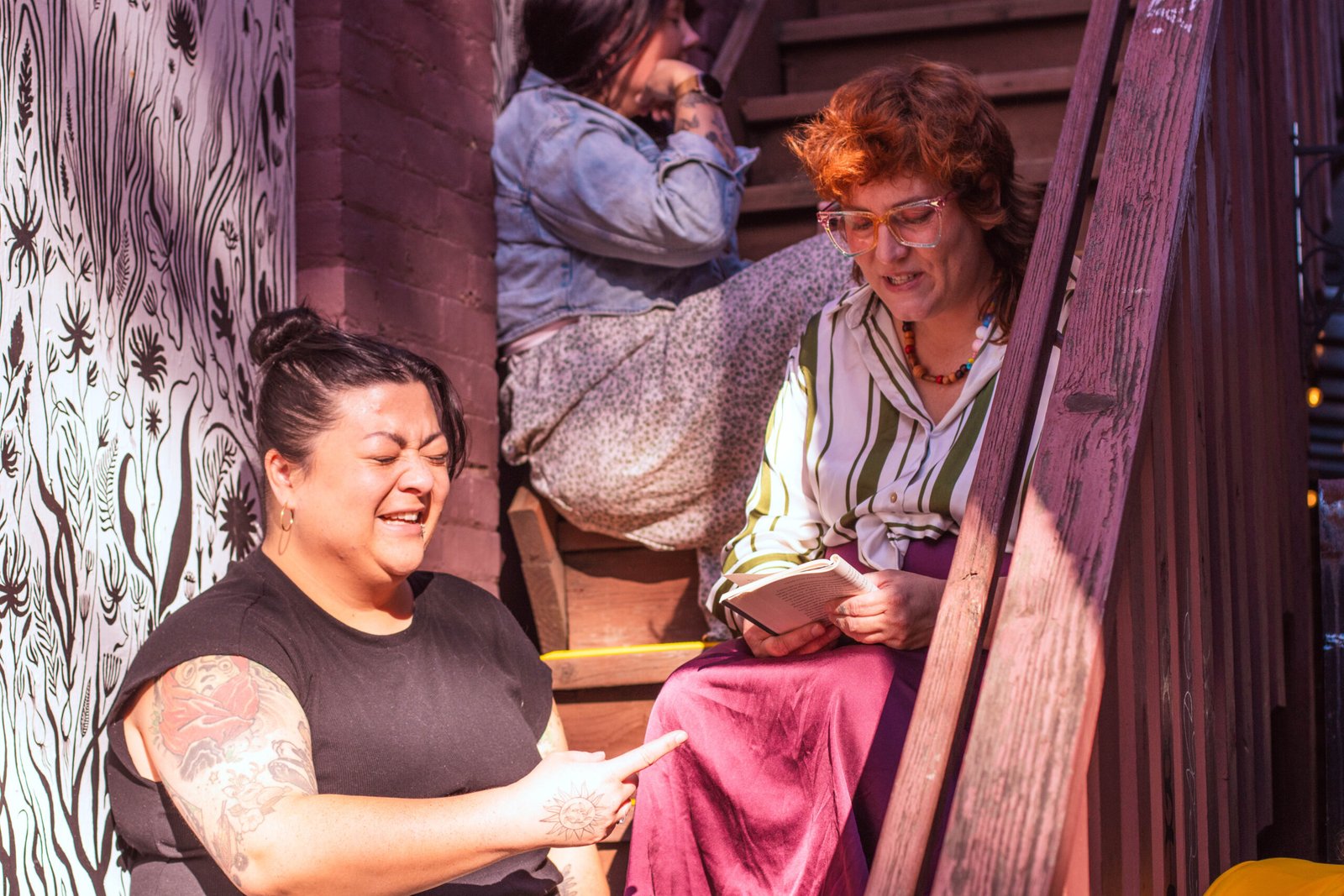
You can experience that in a learning group.
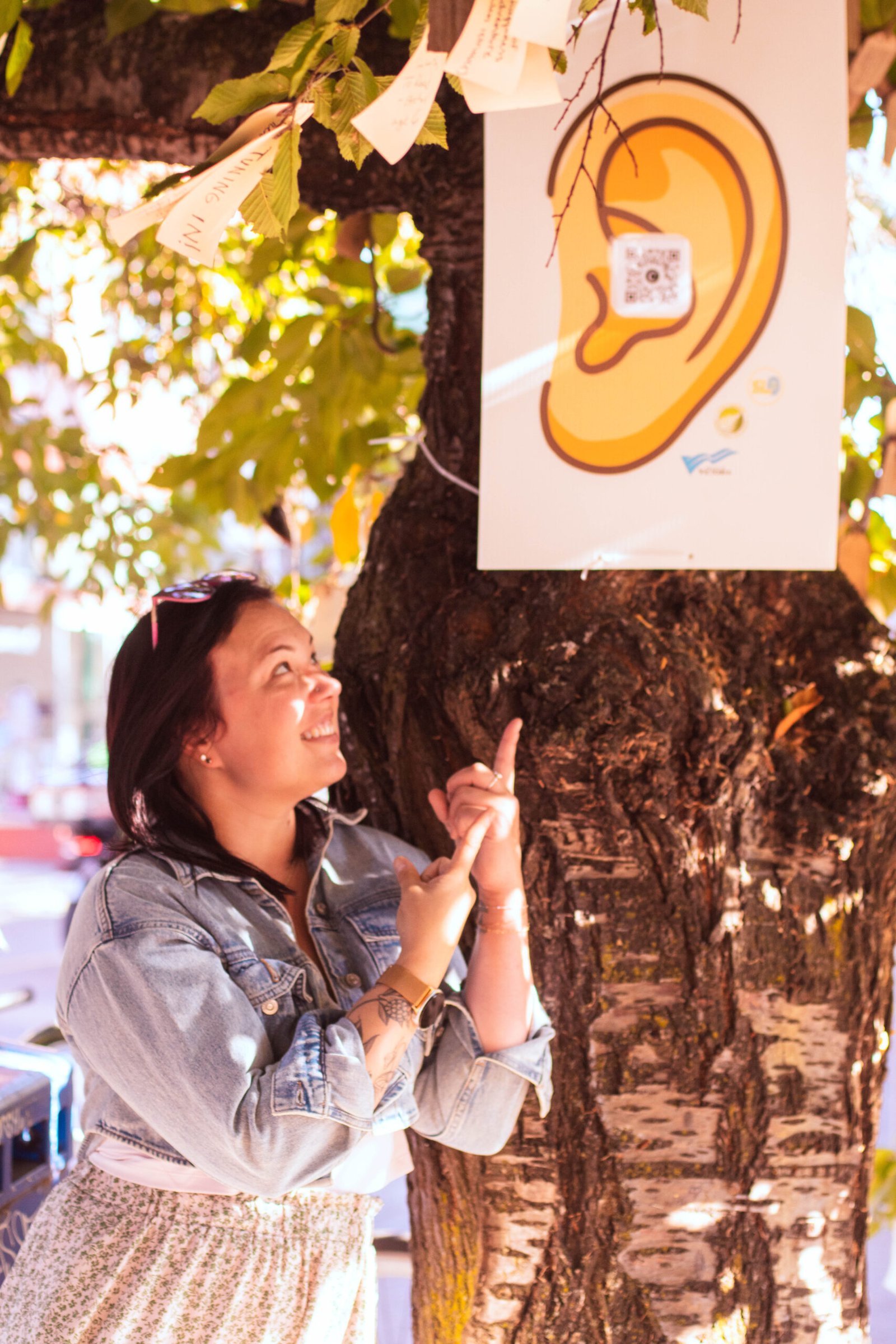
You can also experience it listening to someone tell the truth on a podcast, standing beside a stranger at an installation, or hearing a story at an event and realizing it sounds familiar.
Some things cannot be learned from a checklist.
Our groups, workshops, events, and community experiences create opportunities to test ideas, notice reactions, ask questions, hear different perspectives, and apply what is being learned.
That experiential approach runs through the Access Guide, our facilitated learning, and the public spaces we create.
Our podcast and public resources pair lived experience with clinical, cultural, and systems knowledge.
Instead of simply telling people what therapy is, we let them hear people wrestle with the same questions they may be carrying themselves: What happened to me? What kind of support fits? What should care feel like? What do I have the right to ask for?
Stories make complex ideas easier to recognize in real life — and remind us that experiences we assume are uniquely ours are often deeply human ones.
What begins in a conversation can become a podcast episode.
What emerges in a group can inform a guide.
What happens at an event can open a new community conversation.
What a collaborator learns can become something they carry into their own work.
That is the larger idea behind Let’s Talk Access:
knowledge becomes more useful when people can experience it, question it, share it, and carry it forward.
People who volunteer, collaborate, facilitate, research, create, or partner with Let’s Talk Access are not treated as interchangeable labour around a finished idea. We build opportunities for people to develop skills, test new roles, contribute knowledge, receive mentorship, and grow through the work itself.
Our approach is influenced by Indigenous research methodologies that understand knowledge as relational: something created through relationships, responsibility, reciprocity, reflection, and participation — not simply extracted from people and carried away. That means we expect the project to evolve as people contribute to it. And we expect to be changed by what we learn together.
Help shape how Let’s Talk Access shows up in public. Students work across campaign graphics, social content, event promotion, visual storytelling, and audience engagement — translating complex ideas into clear, compelling creative that people actually want to stop and look at.
Available through OCADU.ca
Support the research behind our free public Access Guide. Students review and synthesize evidence, translate complex mental-health topics into accessible language, and help build practical learning tools designed to improve literacy, discernment, and navigation before care begins.
Available through Mffs.ca
Work inside the production of a narrative mental-health podcast from raw conversation to public release. Students support editing, story structure, sound, accessibility, and episode production while learning how ethical storytelling, lived experience, and strong audio craft come together.
Available through OCADU.ca